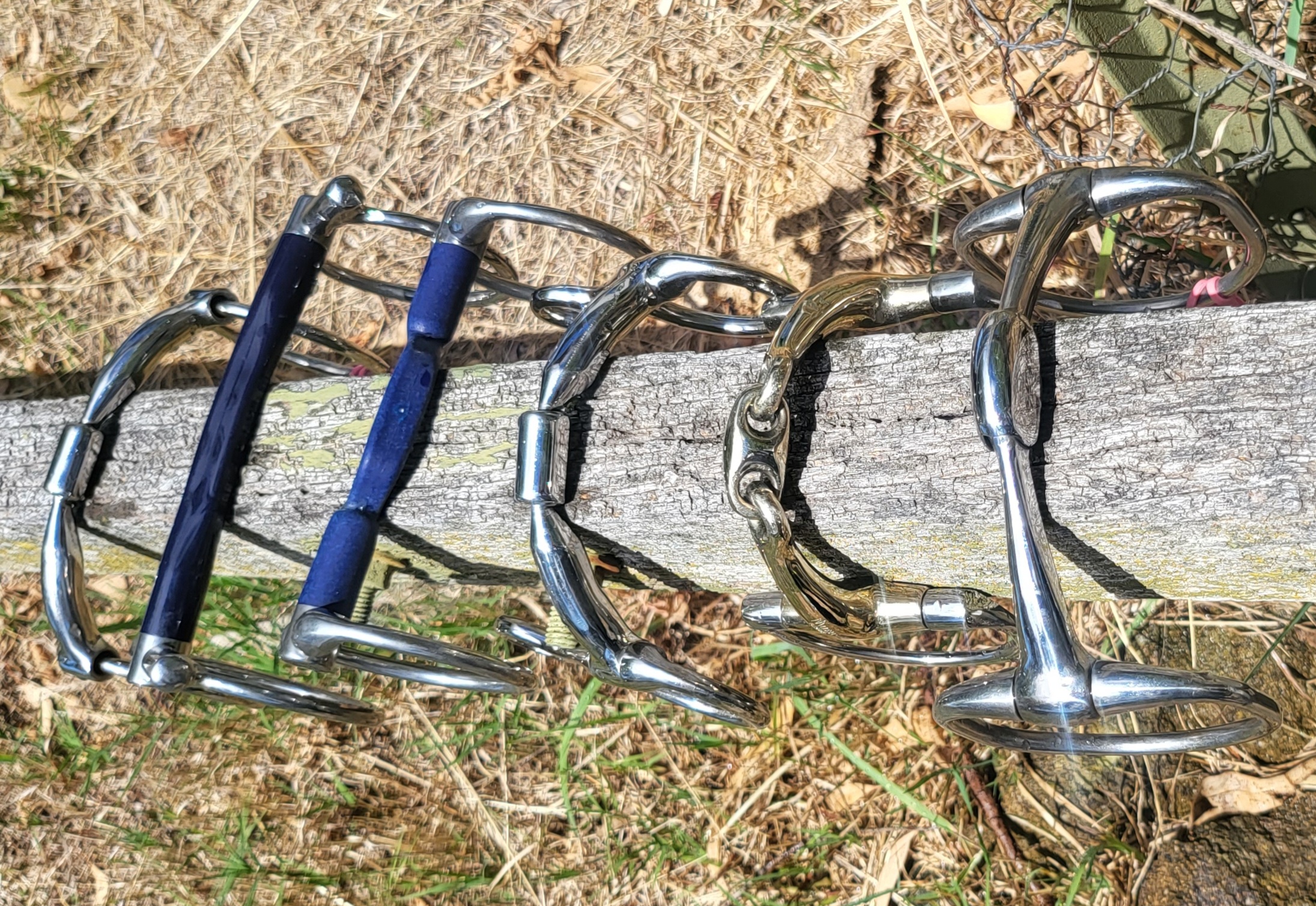
Choosing the right bit and bridle can be overwhelming. With so many options on the market, it’s hard to know what really suits your horse. Bit and bridle fitting sessions take the guesswork out by assessing your horse’s anatomy, observing their responses and trialling a range of options to find what truly works.
Why use a bit & bridle fitter?
A well-fitted bit and bridle can significantly improve your horse’s comfort, confidence and communication under saddle. Poor fit, whether from the bit or the bridle, can lead to resistance, discomfort or behavioural issues.
Many bridles do not fit as well as we think and horses, like people, are rarely one standard size. The horse’s head is full of sensitive nerves and structures, and when a bridle causes pressure in the wrong place, it can result in pain or resistance
You might benefit from a fitting session if:
- Your horse seems uncomfortable in their current bit e.g. tossing their head, chomping, avoiding contact, pulling, or being difficult to steer or stop.
- You’ve recently taken on a new horse and want to set them up for success with the right gear.
- You’re starting a young horse and want to ensure a positive experience from the beginning.
What does a bit fit session include?
- A discussion on the horse’s history, any issues you are aware of, proposed plans for the horse etc.
- Assessment of the horse’s body and oral anatomy.
- Assessment of current bridle fit, or measure for a new bridle.
- Review of current bit, including fit and problems you are facing.
- In-hand work or riding in a few different bits to determine the best fit for you and your horse.
What happens in a bit fit session?
- We will start on the ground so please ensure your bring a halter, your current bit(s) and have a suitable space for riding.
- Ideally your horse is not saddled and bridled when I arrive so I can see it being saddled/bridled.
- We will discuss the horse’s history, what problems you might be having, what your goals are with the horse.
- I will look over the horse’s body as well as it’s mouth. I will discuss what I see with you.
- I will look over your gear and current bit/bridle.
- I will watch you ride the horse in it’s current bit.
- Based on all this information we will try a few bits to see the horse’s response. You will get to ride in the bits as well.
- We will then discuss how we move forward based on the findings.
What is a bridle fit?
Many bridles do not fit well, and many horses are not one size. The horse’s head contains many nerves and anatomical structures that are very sensitive, and when the bridle doesn’t fit right, it can cause your horse discomfort. A bridle fit includes finding the right size of each bridle piece for your horse.
Bitless Bridle Fittings
I have a range of bitless bridles which you can test out. Following the steps above for a bit fit session, we look at how your horse responds to the different styles of bitless bridles to ensure the most comfortable one.
How do I book a session
Please fill in the Bit Fitting Form
Once I receive the form, I’ll get in touch to organise a time.
Simple!
Frequently Asked Questions
Is this bit EA legal?
Whilst I do try to keep on-top of the rules, they do change frequently and it is your responsibility to check if the bit is legal or not. For me, my main aim is ethical bit and bridle fitting, so EA and FEI rules are not my main focus.
Do I have to ride my horse during a fitting?
Not necessarily. We can do in-hand work with the horse if it is not going under saddle. However, ridden is the best way to feel the response to the different bits.
Do you sell me the bit?
I don’t currently sell the bits but I will help you source the bit.
Do you have all bits in your bit fit kit?
There are thousands of bits out there. I can’t have them all, but I have a huge selection of bits. I focus on having a range of quality, well-made, kind and affordable bits in my kit.
Can I do anything to prepare my horse for the bit fit session?
The session involves changing the bit a number of times and for the rider to mount and dismount multiple times. Some horses find this difficult as they are used to a routine of being ridden, then when the rider dismounts/the bridle is removed, the horse thinks the ride is over. You can help by ensuring your horse is comfortable to be bridled and have the bridle removed multiple times, along with mounting/dismounting numerous times in a lesson.
Do I have to walk/trot/canter?
Not necessarily. We try to keep the session relaxing and whatever you feel comfortable doing is fine.